The Geometry of Hesitation: Valuing Human Imperfection in an Automated Age
Reflections on finding authenticity in an era where machines replicate perfection at an unprecedented speed.
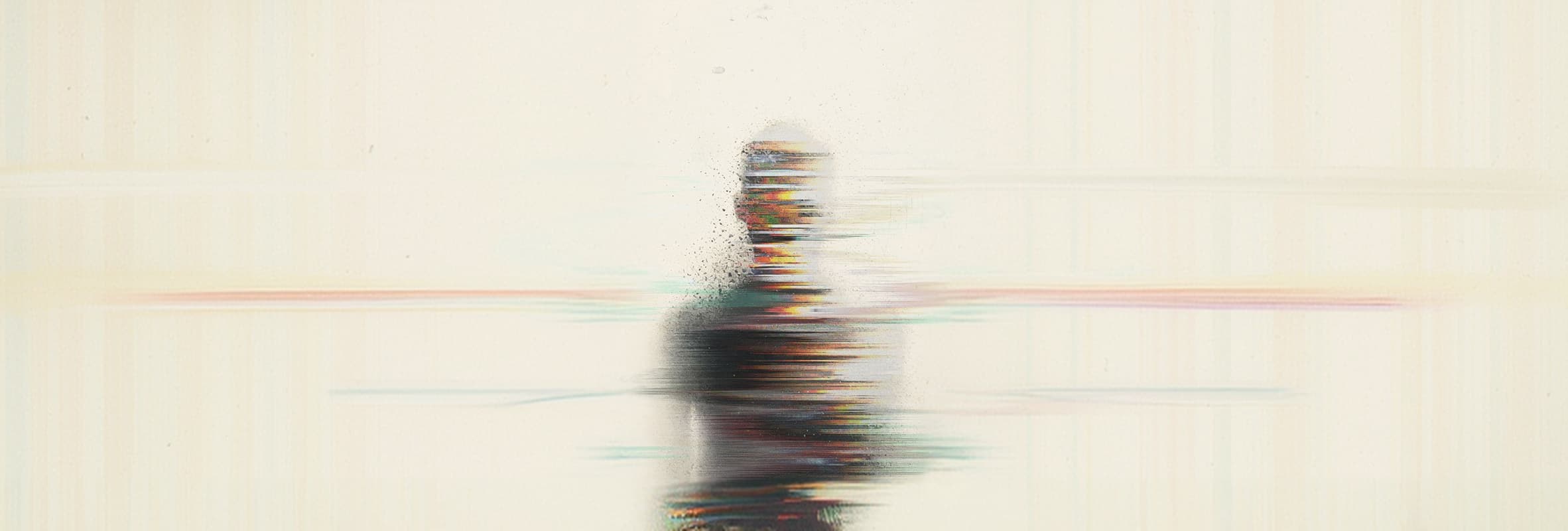
I often think about how perfection has become a commodity. With a simple prompt, AI can generate the most mathematically flawless version of anything imaginable. Yet, staring at these pristine outputs, I find myself yearning for something else. I crave the "geometry of hesitation"—that slight tremor of the hand, that deliberate deviation, that human imperfection which breathes life into an otherwise static form. In an age where everything is optimized for efficiency, perhaps the most radical act of design is choosing to be human.
Beyond the Symmetry of Algorithms
AI models are built on the logic of averages; they provide the "statistically beautiful." But the soul of design rarely lives in the average. In my recent work, I’ve noticed that the more I lean into texture, grit, and subtle asymmetry, the more resonant the design becomes. When we see a line that deviates from the expected mathematical path, we pause. We seek order, but we deeply crave order that bears the fingerprint of a creator. This subtle friction is what transforms a cold, glass screen into a tactile, living experience.
The Line as a Signature
When an algorithm draws a line, it chooses the shortest path between two points. It is efficient, yet it carries no biography. When we draw that same line, it carries the weight of our intent. In minimal isometric structures and linear layouts, I try to embed this "signature." Encountering an asymmetrical geometric form isn't just a visual experience; it is an encounter with a decision-maker. These unexpected intersections are not the result of conversion optimization algorithms—they are the result of human choice. This is where we shift from designing for machines to designing for the human spirit.
The Value of Structural Friction
For years, business logic dictated that design must be seamless, frictionless, and standard to minimize risk. But today, "risk" is what gives a brand its character. Modern, avant-garde brands understand that the digital-native audience craves a moment of pause. If our interfaces are so automated and polished that they require no thought, they leave no lasting impression.
Introducing structural friction—a bit of grit, a broken grid, a moment of visual ambiguity—is an invitation to interact rather than just consume. We aren't here to shepherd users through a machine-optimized funnel; we are here to invite them into an experience that acknowledges their humanity.
Toward a Design of Authenticity
Our mission as designers and engineers today isn't to outpace the machine in its own game of efficiency, but to redefine what we value. AI excels at replicating order, but we are the architects of meaning. Every time we thoughtfully hesitate, redraw a line, or break a grid to serve a human moment, we are defending the fortress of authenticity. Let us move beyond building interfaces that merely "function" and start crafting experiences that "feel." Let us create digital spaces where mechanical perfection humbly bows to the beautiful, imperfect reality of being human.