
Observation Before Execution
A case for why critical design failures stem from a lack of human observation, not tool proficiency.
Introduction: Before You Open Figma
Most of us have learned web design from behind a laptop screen: tools, frameworks, colors, and typography. Yet one thing we rarely discuss is that before clicking on the Figma icon, we should first open our eyes to the world around us.
Web design is, in essence, a form of translation—a translation from the physical world into the digital space. And every translator must first understand the source language before producing an accurate translation. This article is about that source language: the art of observation.
Imagine a user entering an online store. They see the “Buy” button, but they do not click it. Why? A novice designer says, “I’ll make the button larger.” An observant designer asks: “At what stage of the decision-making process is this person right now?”
The difference begins there. One sees only the interface; the other sees the human being. Observation means asking, before “What should I design?”, the question: “What experience is this person going through?” Not only on the web, but in real life as well.
The Gallery Metaphor: The Art of Seeing What Is Hidden
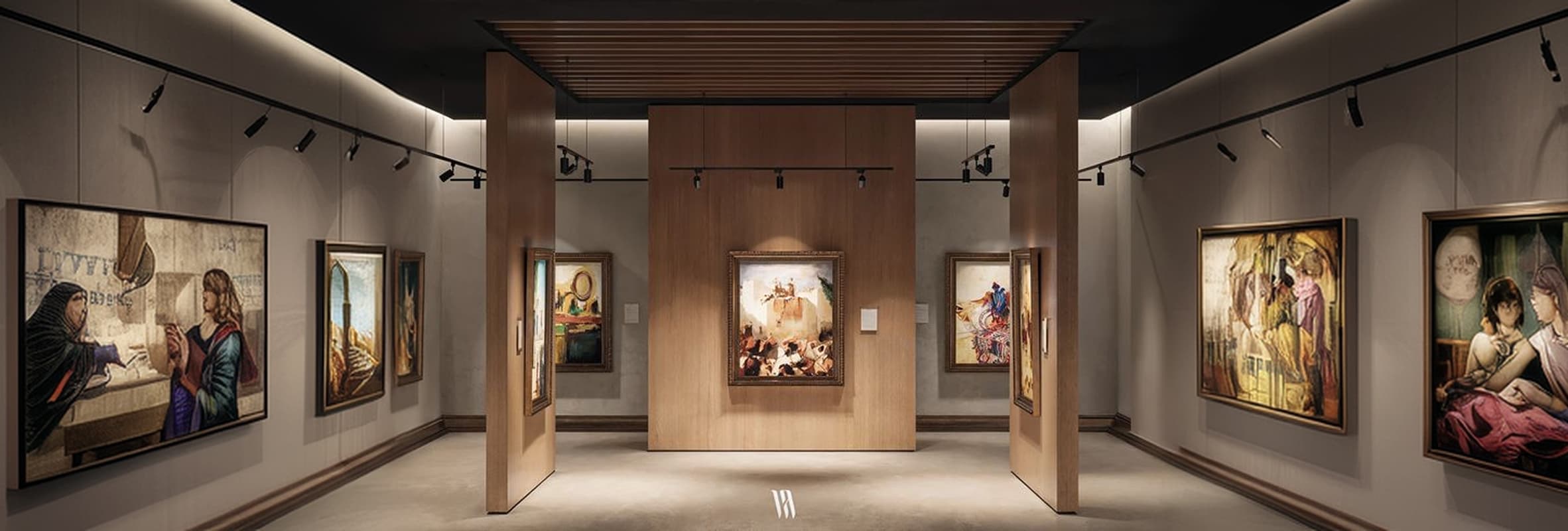
Perhaps we cannot directly teach people how to view the world, but we can invite them to observe it more carefully. My interpretation of an art gallery is a free and unique translation of reality—something like a fingerprint. These interpretations are formed within each individual and cannot be transferred directly, yet they are not without structure.
Imagine walking into an art gallery. Paintings are displayed on the walls around you. Your first reaction is visual. The artworks may not align with your personal taste, but you will inevitably form an impression of them.
Then the painter approaches and explains the idea behind the work. You try to move closer to their perspective, yet your understanding of the piece—along with emotions such as anger, fear, joy, or disappointment—remains uniquely your own.
This difference in interpretation reveals something important: every individual carries a unique translation of reality within their mind. Depending on our abilities and the way we interact with our environment, this internal translation expresses itself in different forms—sometimes through words, sometimes through painting, music, photography, or even physical reactions.
From Physical Observation to Digital Design
You might ask: what does any of this have to do with web design? The answer is that web design is also an expression of our understanding of the world around us. The difference is that, in this context, utility matters. Web design is not merely the expression of perception; it is perception placed in service of solving problems.
Return to the art gallery, but this time through the eyes of a web designer.
Observe the asymmetrical arrangement of artworks on the walls. Notice the deliberate imperfections in the placement of frames, as if they carry an unspoken message. Look at the cold color palette chosen by the painter—does it suggest something beyond aesthetics? Pay attention to the sequence of artworks as you move through the space. Are they telling a story? Is that sequence accidental or intentional?
Notice the painter’s neutral clothing, the background music, and even the scent that fills the room. Together, these elements create a unique experience for visitors.
Now imagine that the painter asks you to bring their next gallery into the digital world. At this point, you face a lack of reliable data, because every artist has a different perspective and approach. Therefore, you must return to the existing gallery and observe it carefully.
Do visitors stand in front of a particular artwork for several minutes, or do they pass by quickly? Do they discuss certain pieces with one another? Do they naturally follow a specific path through the gallery? These small details matter, because these visitors will become the future users of the online gallery.
The Balance Between Art and Utility
In web design, we constantly move between two points: personal interpretation and user needs. Yet there is an important nuance here. We do not design solely to satisfy users’ desires. Our responsibility is to translate the goals and intentions of the painter—the client or project owner—in a way that also serves the needs of visitors.
In other words, good design is an effort to create balance between business objectives and user needs.
This means we must first understand the painter’s goals:
- Why an online gallery?
- Why now?
- What defines success for this project?
Then we complement that understanding by observing visitors and speaking with them. For example, we may investigate why this gallery attracts more attention than previous exhibitions.
Only then do we begin translating those insights into a web experience—the stage where each designer brings their own unique interpretation to the work.
But how do we know when that interpretation is constructive and when it becomes excessive? The answer takes us back to the data. Do our observations support our decisions?
If not, perhaps we need more information. Or perhaps we are complicating a problem that has a simpler solution. There is no universal formula. Only through observation, practice, and experience do we learn how much information is enough, and how much simplicity or complexity is appropriate.
Practical Exercise: From Gallery to Grocery Store
To practice this approach, visit a local grocery store. Observe the environment carefully. Take notes on the arrangement of shelves, customer behavior, lighting conditions, and even the sounds within the space.
Then imagine—or conduct—a conversation with the store owner. Assume that you have been asked to design a website for a specific purpose, such as online sales. Gather the information you need and attempt to create your own translation of that physical experience into a digital one.
Closing Thoughts
Design is seeing before it is making. Every interface we create is a translation of our understanding of people, behaviors, and the world around us. The deeper our observation, the more accurate that translation becomes.
Perhaps the most important skill a designer can develop is not mastery of tools, but the ability to notice what others simply walk past.
Notes
This article originated from the moment I realized that most design mistakes do not happen in execution, but in not seeing.